


Dan Stouck, cellar master
By Lidija Biro
If you live near a vineyard in Niagara, you may have wondered why the bird bangers and netted grape vines were still around this late into the growing season with Christmas just around the corner.


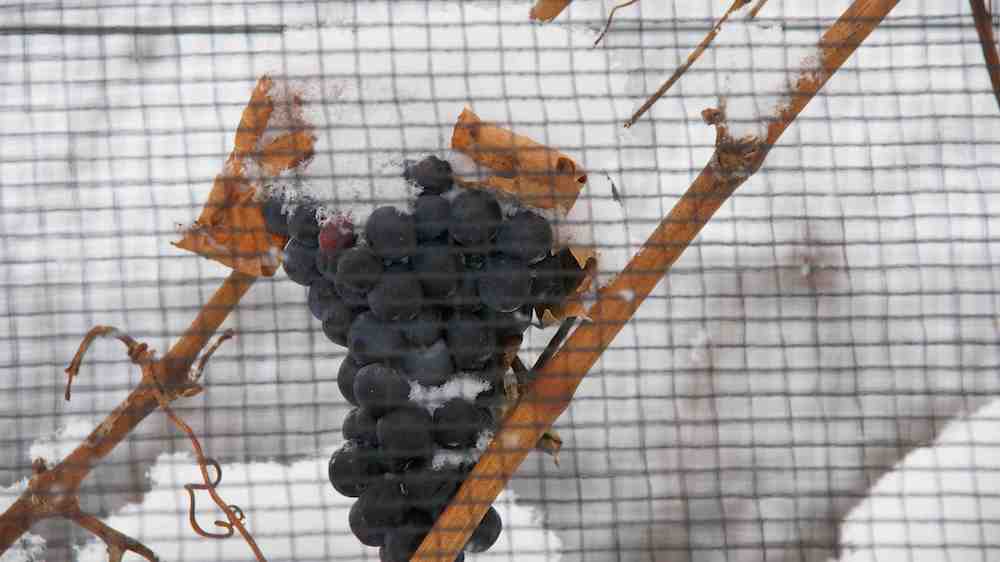
Well, it’s the start of the icewine harvest. When the temperature drops to -8 C (at a minimum) the netted grapes freeze, and wineries have their picking crews and winemakers on alert, ready to harvest … no matter the time of day or night.

It was midnight on Dec. 4 and the team at Malivoire Wine Co. had kindly extended an invitation to Wines in Niagara to join the fun.


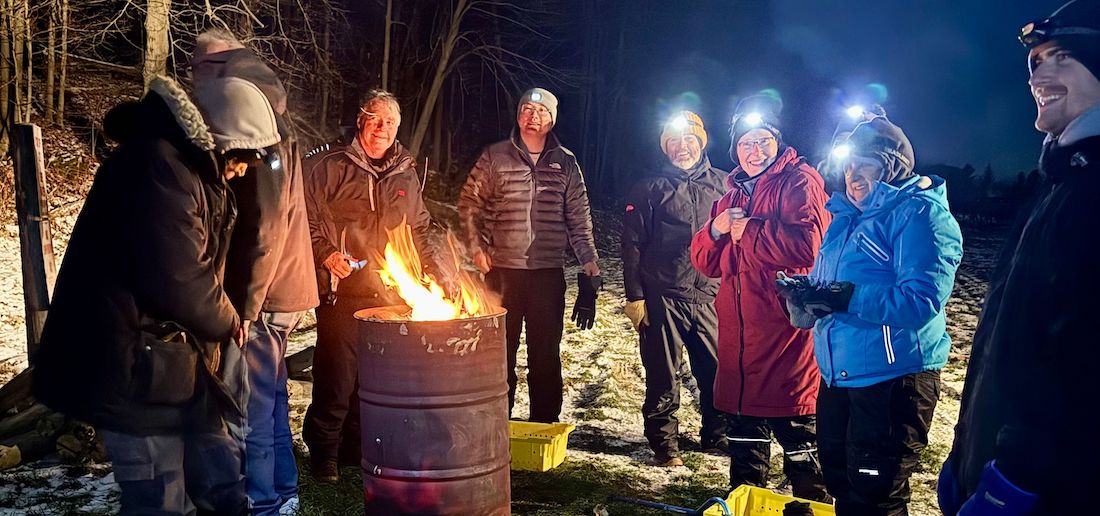
Shiraz Mottiar, team principal and GM at Malivoire, stood outside with an orange safety vest and headlamp greeting the picking crew as they arrived. Inside the winery, hot chocolate and soup were being prepared to warm the crew at the end of the long and cold night.
Owner Martin Malivoire and his dog were on hand to cheer on the harvesters as vineyard manager, Tristin Bondett, handed out the hand pruners. Final instructions and distribution of headlamps were shared before we headed out with a full moon and bright stars lighting the way.
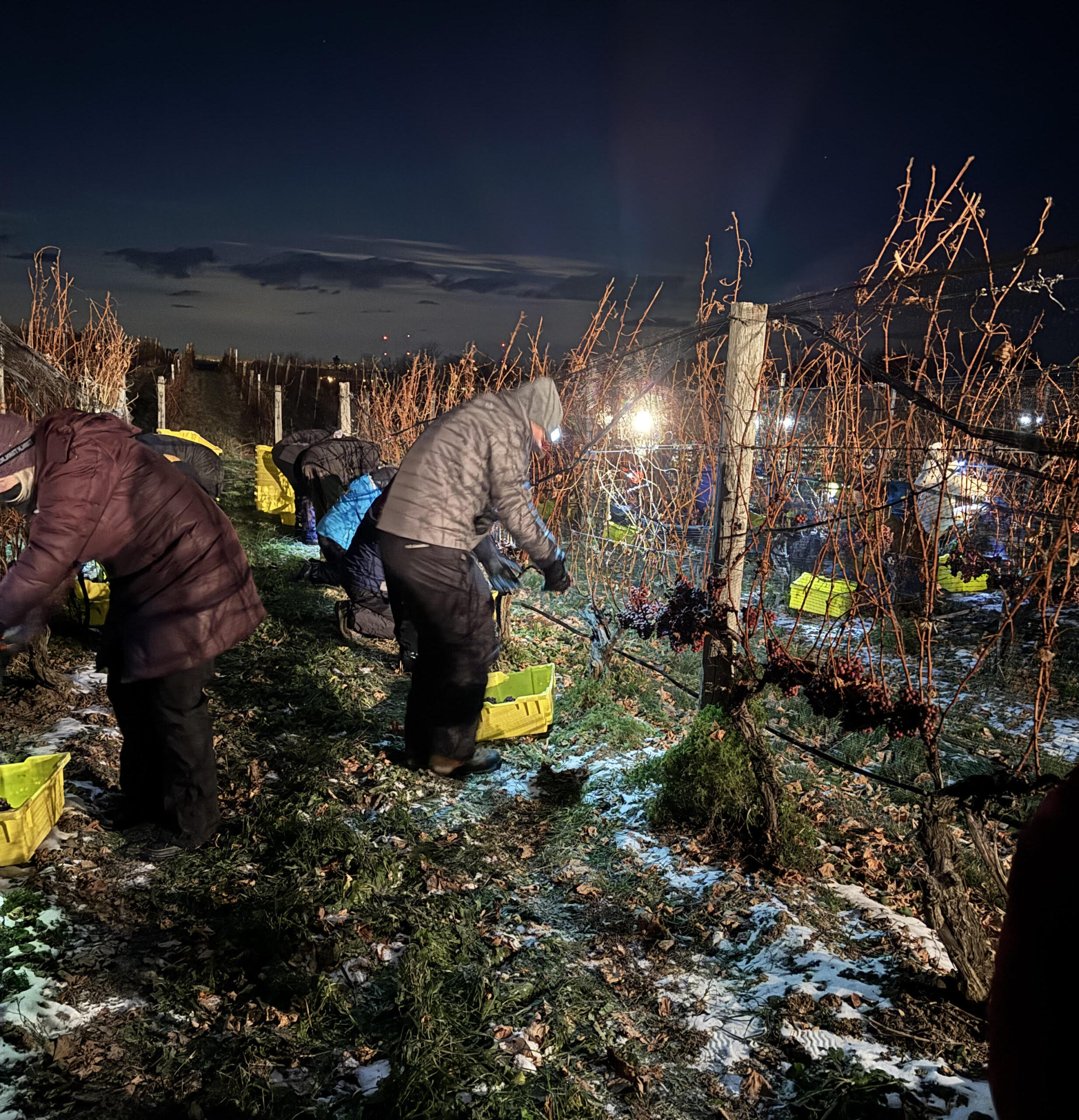
Eighteen wine club members, 13 staff (and one wine writer) made their way through the vineyard to a block of Gewürztraminer grapes nestled beneath the backdrop of a wooded Niagara Escarpment.
The excitement was palpable as this was the first icewine harvest at the winery since 2019. COVID had put a damper on demand for the sweet stuff, so none was made in the interim.


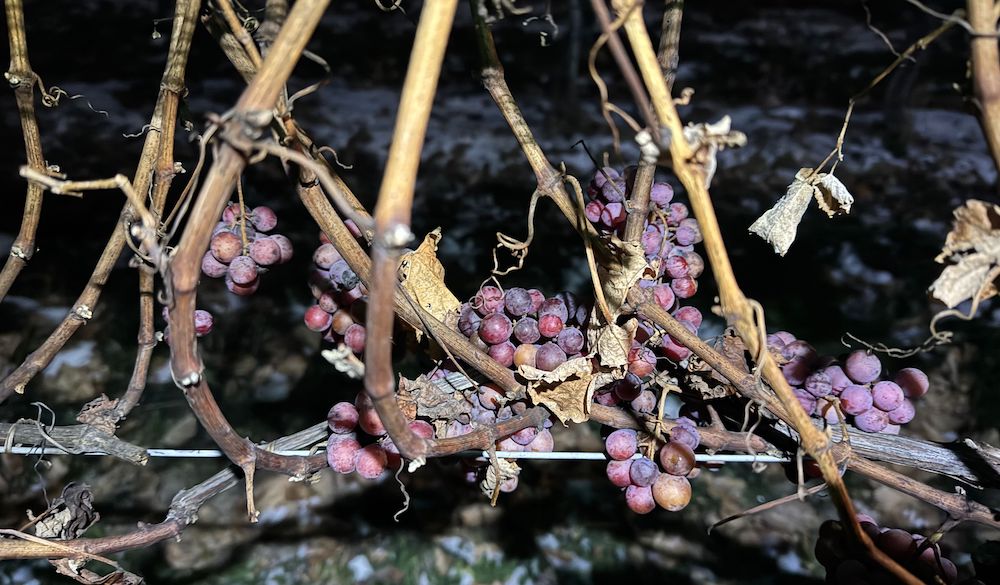
But this night, we were to pick eight rows of pink hued Gewürztraminer, above, hopefully amounting to three tonnes of frozen grapes to be pressed. Mottiar jovially asked that no berry go unharvested.
At the next opportunity, when temperatures dip below -8 C again, the Malivoire team will also harvest Cabernet Franc for icewine.

We each received a yellow harvesting bin and got down (literally) to snipping the small frozen grape clusters off the vines. As our bins filled, there was chatter, laughter and questions about icewine production posed by various wine club members. Mottiar shared that the grapes will immediately be pressed in small hydraulic basket presses.


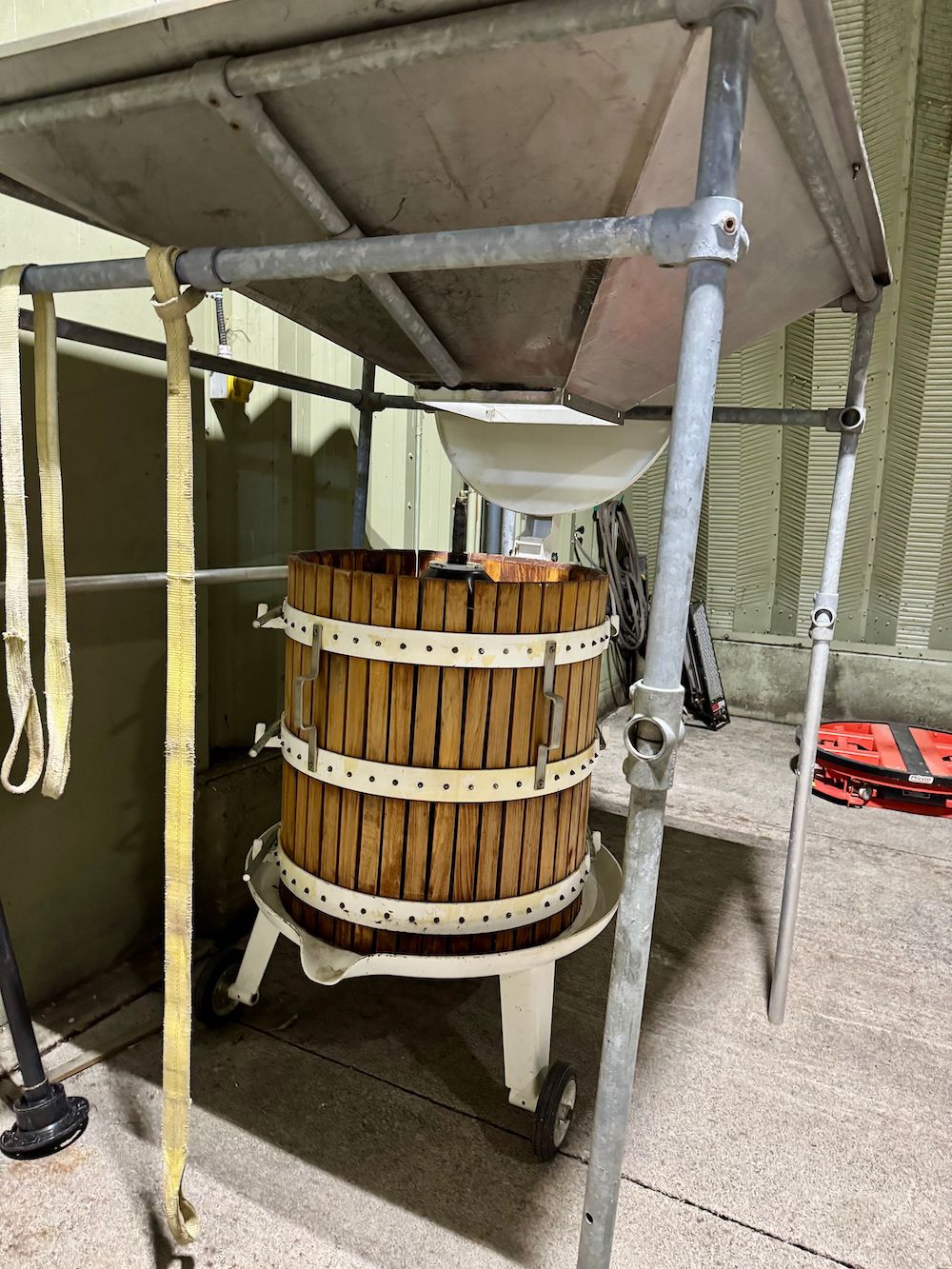
Very little of the sweet and syrupy juice is extracted as most of the mass of the frozen grapes is water, which is left in the presses as ice. That concentrated juice (averaging around 40° Brix) is then inoculated with a strong, cultured yeast for a slow (often difficult) fermentation in stainless steel tanks that could take a few weeks.
The final result is a sweet wine (at about 240 g/L of residual sugar) — nectar of the gods, liquid gold — requiring great labour and care.
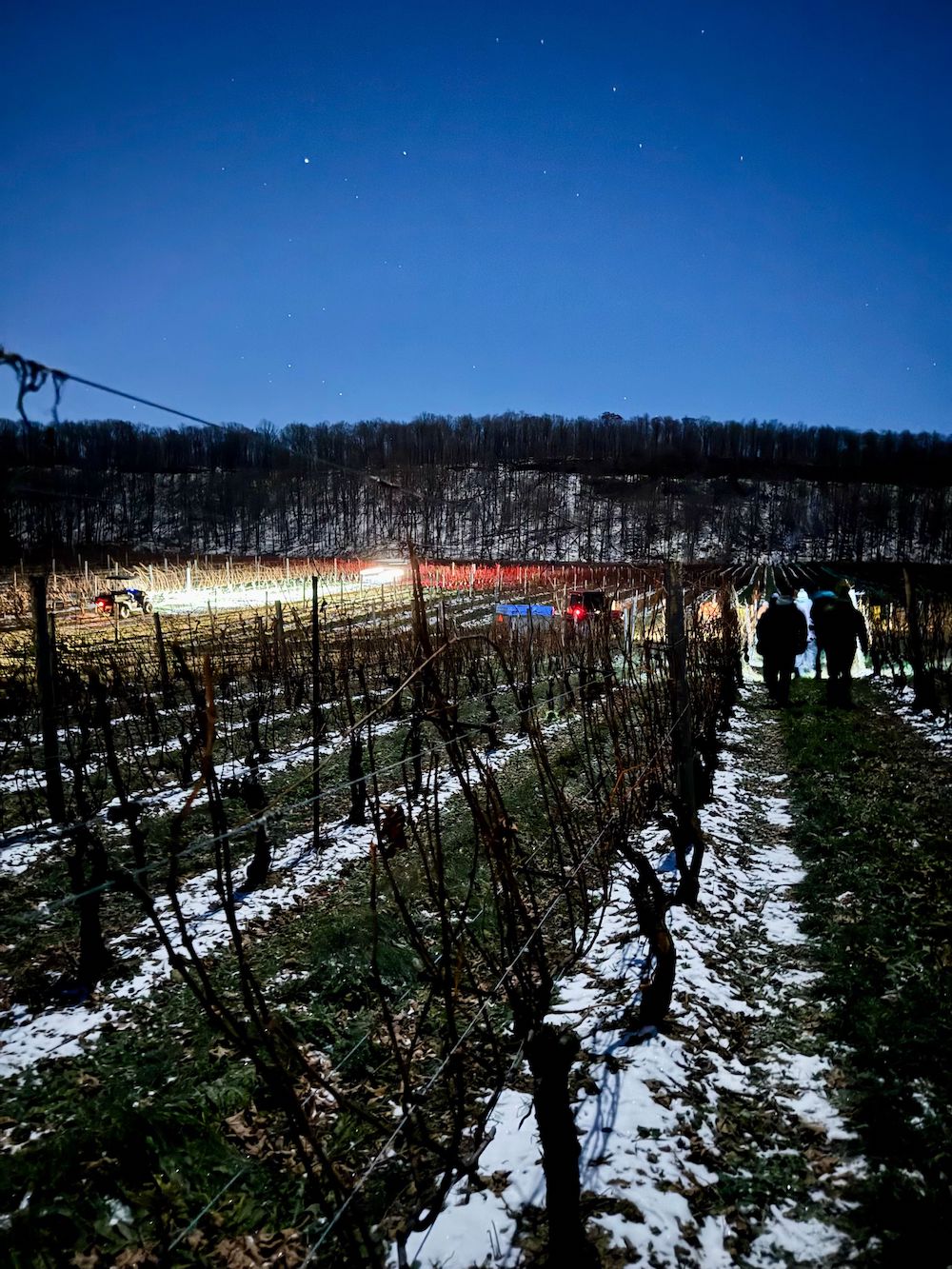
As we continued to harvest, the chatter and laughter died down somewhat, likely due to the cold -10 C temperatures taking a toll on our bodies. But thanks to the wonderful organization that went into the event, there was a warming bonfire waiting at the end of a row marking the halfway point of the pick. It was 2 a.m. with more rows to go but spirits were still high. This wine writer took her leave at that point.
On the drive home, lights shone in many vineyards as giant harvesters wound slowly among the vine rows. The 2025 icewine harvest had begun under the silvery glow of a super moon. It was a magical night!
Note: In a followup note, Mottiar said “we finished at 4 a.m., so four hours of picking. Some of the crew left after three hours, and certainly there were some cold feet and sore knees, but spirits were high afterwards for those who stuck it out to the end when we sat inside to warm up with some treats and hot chocolate. We certainly got more than three tonnes, maybe even 3.5 tonnes.”
Icewine tonnage up from last year
A total of 2,853 tonnes of icewine was netted for from the 2025 harvest, according to VQA Ontario. That’s up from 1,976 tonnes in 2024 but down from 4,095 tonnes in 2023.
If you are wondering, an early December harvest of icewine is rare, but not unheard of. In 2024, the harvest began on Jan. 14. The earliest harvest ever recorded was in 2019 when the first icewine grapes were picked on Nov. 12, even while some Cabernet Sauvignon was still hanging on the vines.
What is icewine and how is it made?
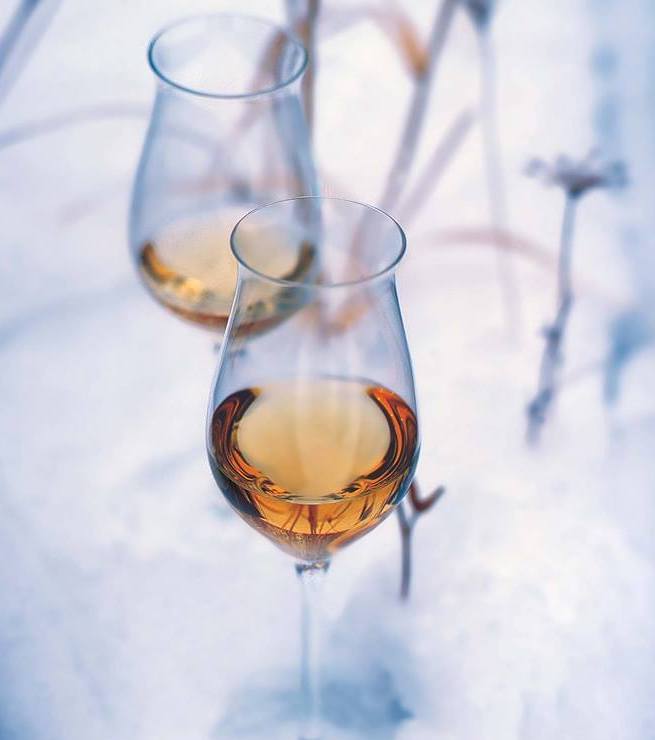
Icewine is a dessert wine renowned for its intense flavours, rich bouquet and unsurpassed smoothness. It is produced from grapes that have been left on the vine after the fall harvest. When temperatures dip to -8 C (or lower) the frozen grapes are handpicked and pressed immediately to carefully release a thick, rich, yellow-gold liquid, highly concentrated in natural sugars and acidity.
VQA Requirements for Icewine
• Production must be monitored by a VQA-appointed agent who will stop the harvest once the temperature rises above -8 C.
• It must be produced as a varietal from approved grapes.
• The grapes must be naturally frozen on the vine and harvested and pressed in a continuous process while the air temperature remains at or below -8 C.
• 100% of the grapes must be grown within a viticultural area, which must be indicated on the label.
• The average sugar level of the juice used must reach at least 35 Brix (Brix is the measurement of sugar in grapes) and both the alcohol and residual sugar in the finished wine must result exclusively from the natural sugar of the grapes.
Comment here