

By Lidija Biro
I am delighted to report that the white wine varieties of France’s Rhône Valley are thriving in Niagara’s cool climate vineyards.
Viognier has been grown in Niagara for a while, but it has now been joined by Marsanne and Roussanne (very recently approved by VQA) and all three have been enthusiastically embraced by winemakers and consumers alike.


If you are looking for an alternative to a full-bodied Chardonnay, then Viognier or Marsanne or a blend of all three varieties should be your “go to” wines. They are aromatic, mid- to full-bodied, textural wines. And they are growing in popularity.
What to expect from these grapes:

Viognier — Perfumed aromas of peach, apricot, tangerine, honeysuckle, white flowers, and wet stone. On the palate, rich flavours of apricot and peach with a soft, creamy texture, and a hint of spice;
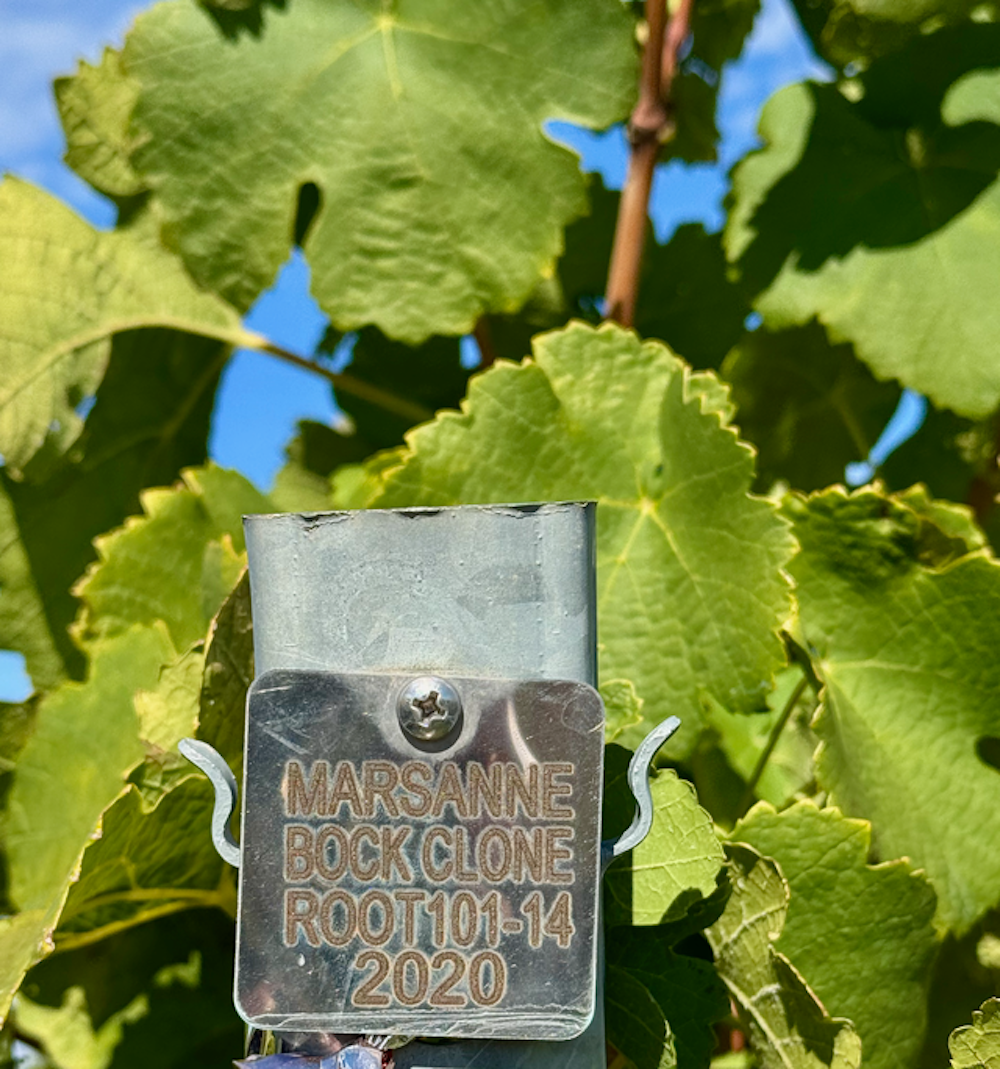
Marsanne — Aromas and flavours of citrus and stone fruit but riper versions show poached pear and apple, spice notes and deep colour. With age, Marsanne develops a honeysuckle character;



Roussanne — Aromas and flavours of fresh flowers, peaches, pear and golden apple, herbs (sage), spice, roasted nuts, and hints of pepper.
Wines in Niagara reached out to several grape growers and winemakers and asked them three questions:
• Why have these grape varieties made a home in Niagara despite the challenges of humidity and winter?
• What style of wine should consumers expect?
• Why the recent rise in popularity for these wines?
The best place to start is always at the beginning.

Well-known and respected Niagara winemaker Philip Dowell (above), formerly of Angel’s Gate Winery (now Domaine Clos Jordanne) and Kew Vineyards (under Arterra ownership since 2023) was one of the first to plant Marsanne and Roussanne.
Dowell, originally from Australia, where these white Rhône varieties are abundantly planted, refers to what he has learned about climate types and wine production.
“Niagara is strongly in the continental range. Northern Rhône, as you get further from the Mediterranean, becomes continental so those varieties there should be suitable here,” Dowell said. What defines Niagara is not its growing season or heat units but the ability to survive the winters.”
He goes on to say that “Marsanne is very tolerant to cold winters, Roussanne less so, and Viognier not so much. The hot summers lend themselves to the style required for Viognier. Marsanne and Roussanne are middle bodied whites and an alternative to Chardonnay and Pinot Gris. In particular, the style made in larger oak casks or barrels provides the palate enhancement of oak aging without being oak driven,” explains Dowell.
Note: Dowell is a partner and chief winemaker for Millesime, a division of Niagara Sparkling Wine Service Ltd.
•••
Rick Smith, a grape grower in the Niagara Lakeshore sub-appellation, has been growing Viognier for 23 years. He has three acres of Viognier (clone 642 on rootstock 3309).
Smith confirms that “Viognier is a winter sensitive variety. We leave extra canes when we prune. They are also protected with wind machines when temperatures and conditions are favourable. We keep them clean and free from disease throughout the season, which plays a key role in a late season variety for ripening. A lot of patience is needed with this one. With cooler years we are into a November harvest with fruit dehydrating,” he adds.
The majority of Rick Smith’s Viognier fruit goes to Big Head Winery, with smaller amounts to Wending Home Winery, Creekside and Strewn.
Smith will tell you that every year has its challenges, but he is very optimistic with the harvest this year stating, “This year’s crop is looking to be one of the best.”
•••
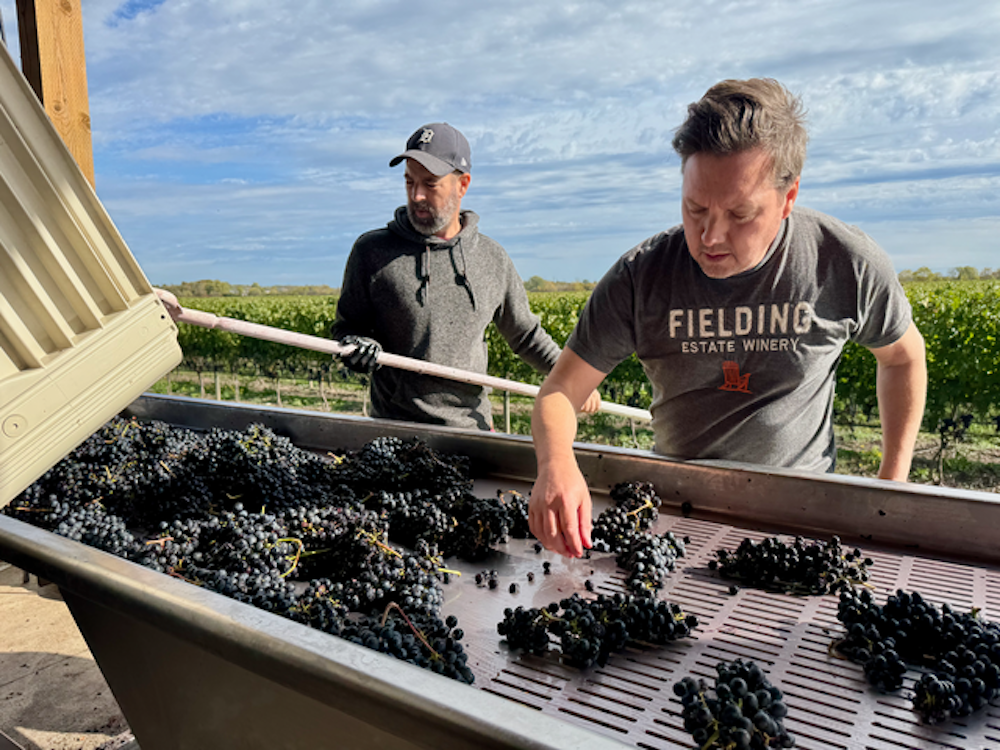
Newer to growing Viognier, Marsanne and Roussanne is owner Taylor Emerson, above right, and winemaker Jonathan McLean, above left, of Black Bank Hill Winery in Lincoln Lakeshore sub-appellation.
Nestled right below the escarpment, Taylor points out that they are in a heat belt helped by the combined moderating effect of Lake Ontario and the Niagara Escarpment. “These varieties are surprisingly cold hardy here,” said Emerson.
The Rhône varieties are often considered to have low acidity. But McLean is quick to say. “There are no worries about an acidity drop as fruit ripens. This is Ontario. Our soil is mostly clay which controls vigour but also maintains acidity.”
McLean worked at wineries in British Columbia where Rhône varieties are more commonplace. He thinks for Ontario wine consumers these wines don’t immediately spring to mind … but that is changing.
Emerson and McLean have a surprise planned for their spring release … a blend of Viognier, Roussanne and Marsanne. Can’t wait!
•••

Quite literally, kitty corner to Black Bank Hill Wines, is Mio Vineyard. Benefitting from that same heat belt and soil composition, Corey Mio, above, has planted an acre of Marsanne with an adjoining row of Viognier for blending/co-fermentation purposes. The Viognier gives a floral lift to the wine.
Mio suspected that growing Marsanne might be precarious, but he confirms that after the severe winter of 2021 there was less damage among the Marsanne vines than Gamay (notably more cold hardy).
As to why he decided to try the Rhône varieties, Mio reflects that he fell in love with Kew Marsanne years ago when he was discovering Niagara wines. The fact that Kew Vineyards is only a couple hundred meters away from his own vineyard indicated that there was a good chance of success.

Marsanne crops well and the fruit clusters are loose, so disease pressure is not significant. However, Mio does keep a close eye on the Marsanne vines, offering some tender loving care with leaf removal at the fruiting zone to allow sun exposure and even a bit of sunburn.
Mio explains that “the clusters turn golden brown, amplifying sugars and phenolic development. I even hand turn the shaded side of the clusters around to get sun.” He prefers to pick Marsanne a bit early because acidity can drop off quickly as the fruit ripens, whereas he does not have the same worry with Viognier.
With Marsanne, said Mio, “it’s all about texture as well as being full-bodied, voluptuous, waxy, and with a slight bitter note on the finish, which I like.”
•••

Jeff Moote, above, founder and winemaker behind Divergence Wines, said that “certainly there is a bit of a push forward (with these wines), although Viognier has been made for a long time by many Niagara wineries. My fruit is from Bock Vineyard, and the grower is Ian Bock. Prior to me, he sold it to Adamo and Therianthropy, among others.”
The Bock Vineyard is located in the St. David’s sub-appellation, planted on gentle south-facing slopes of the escarpment with heavy clay-loam soils. The site forms a warm, sunny bowl helping to ripen the Rhône whites.
“For many years, Kew Vineyards was the only winery with a commercial Marsanne, although more have come along like the previous Bock Vineyard wines I mentioned and now mine, along with passionate new growers such as Mio and Black Bank Hill.” adds Moote.
“Roussanne was just approved for use in VQA wines this year. As far as I know the only two commercial plantings in Niagara are Bock and Black Bank Hill, but I could be missing some. My MRV (a blend of Marsanne, Roussanne and Viognier) is the first VQA blend to name it on the label, and I believe Black Bank Hill will be releasing the second.” said Moote.
•••
These wines are exciting and to be enjoyed anytime of the year, but their weight and texture make them perfect winter whites. Wines tasted and reviewed by Lidija Biro:

Malivoire Stouck Viognier 2024 ($28, 90 points) — Dan Stouck is a 6th generation steward of his family farm in the Lincoln Lakeshore sub-appellation. With a fondness for aromatic white wines, Stouck’s natural inclination always leaned to Viognier. Gold in colour, floral and fruity, this wine underwent a cool fermentation in stainless steel tanks. Aromas of honeysuckle, candied citrus peel, lychee fruit, apricot and peach give way to herbal and spice notes. The palate proves lighter in weight (without the influence of oak) but silky in texture and with flavours of tangerine, apple, peach, tarragon, and ginger spice. So very quaffable!
Marynissen Estates Heritage Viognier Stouck Vineyard 2023 ($25, 90 points) — Another nod to heritage and single vineyards is this iteration of Stouck Viognier fruit made into wine by Marynissen winemaker Mitch McCurdy. Pale gold in colour, the wine offer aromas of honeysuckle, mint, peach, Bosc pear, and a whiff of caramel. On the palate the wine delivers peach and poached pear, a minty herbal note and ginger spice. A refreshing streak of acidity accompanies the round mouthfeel and satin-like texture. Delightful.
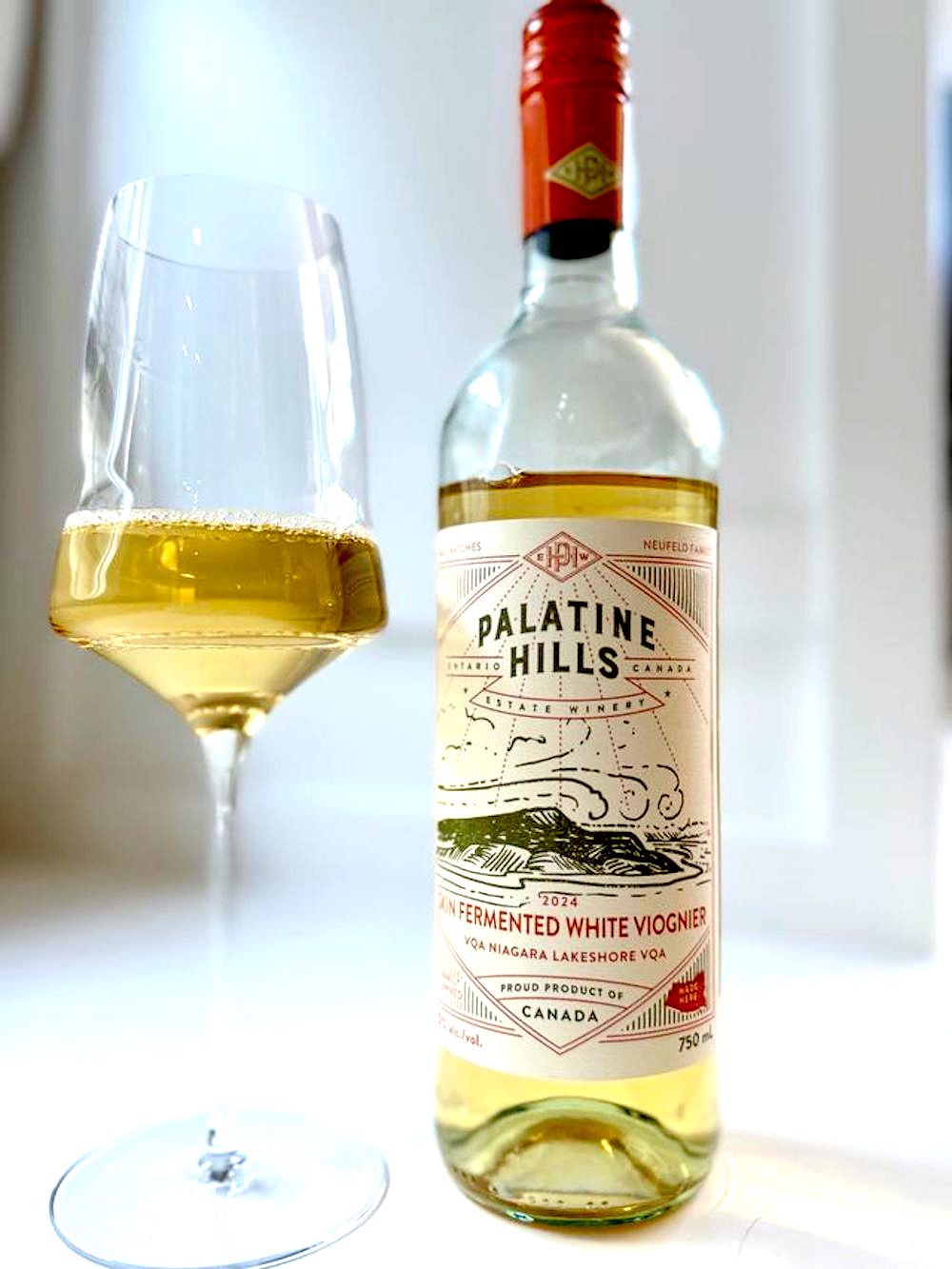
Palatine Hills Lakeshore Skin Fermented White Viognier 2024 ($20, 89 points) — Neither the winemaker (Vadim Chelekhov) nor I expected this. Chelekhov’s story first. The estate block of Viognier (Niagara Lakeshore sub-appellation) was mistakenly picked early along with the Sémillon block. The owners of Palatine Hills had urged Vadim in the past to make a skin fermented white (or orange wine) which he had resisted. But now with Viognier picked slightly underripe, he decided to have a go. My turn … I have tasted several ‘orange wines’ but have not developed a liking for them. However, having tasted this one, I have to admit, it’s really good! Deep gold in colour, this wine entices with aromas of apricot jam, orange rind, honeysuckle, fresh baked bread and yoghurt (leesy notes). The palate delivers flavours of ripe apricots, Seville orange marmalade, ginger spice and sourdough bread. Light, lifted finish with a hint of fresh pine needles. A joyful discovery wine (and only 11% abv.).
Kew Vineyards Marsanne 2020 ($19, 91 points) — From the Beamsville Bench appellation, Kew Vineyards was among the first to have plantings of Marsanne and Roussanne. This wine is from the ripe vintage of 2020 and is drinking well five years on with some tertiary characteristics starting to show. Bright gold in colour, the wine conveys aromas of peach pie, some floral notes and a hint of vanilla. The rounded mouthfeel and satiny texture are balanced with just enough acidity. Flavours of poached pear, mint, toasted nuts, and spice linger on the lengthy finish.
Mio Vineyard Sempre Mio Marsanne 2024 ($33, 91 points) — Corey and Lena Mio’s Lincoln Lakeshore vineyard has an acre of Marsanne and one row of Viognier. These varieties are whole cluster pressed and co-fermented (85% Marsanne, 15% Viognier) in neutral French oak barriques and one new oak puncheon. This is a low intervention wine with spontaneous/wild yeast for both primary and malolactic fermentations, no additives, minimal sulphur additions and light filtration before bottling. The emphasis is on expressing the fruit. Gold in colour with aromas of exotic fruits, apricots, honeysuckle, brioche and yoghurt (from lees ageing), and a note of salinity. Ripe apple and pear flavours meet savoury and spice characteristics on the mid palate. The wine is rich and creamy with a solid backbone of acidity for balance.
Recently tasted and scored by Rick VanSickle:

Black Bank Hill Viognier 2022 ($40, wine club only, 93 points) — The fruit for this stylistic Viognier was transferred, unsettled, directly to a second use French oak barrique where it was wild fermented for 28 days. It was aged for 17 months, transferred to tank and bottled. What a treat this bold and sassy Vio is! Notes of ripe apricot, nectarine, poached pear, summer peach and ginger spice on the nose. It has an oily texture on the palate with a touch of reduction and flavours of apricot tart, marmalade, honeysuckle, quince, mango, savoury notes and lovely baking spices on a luxurious, long finish. A very fine Viognier that would be fun to taste in a couple more years.
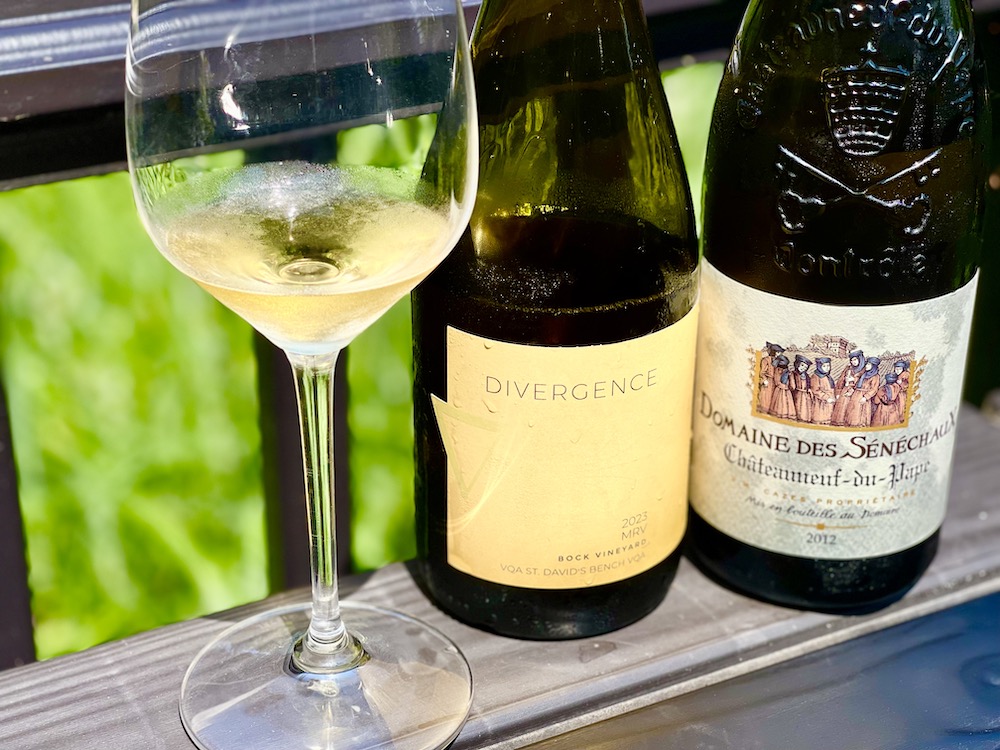
Divergence Wines MRV 2023 ($33, 94 points, retasted beside a Rhone Chateauneuf-du-Pape, 94 points) — Roussanne makes up 32% of this Rhone variety blend with rest consisting of 39% Marsanne and 29% Viognier from the Bock Vineyard. It is Niagara’s first Roussanne blend that is officially VQA approved. Wines in Niagara reviewed this wine previously but wanted to see if there are any similarities to the white blends from the Rhone. I pulled out a 2012 Domaine des Sénéchaux Blanc, a blend of 33% Roussanne, 29.5% Clairette, 29.5% Grenache Blanc and 8% Bourboulenc. Not exactly the same, but the percentage of Roussanne is close in both bottlings and there was a nice similarity between the two wines despite the 10-year age gap. For Jeff Moote’s Rhone blend, the Viognier was pressed separately, while Marsanne and Roussanne were pressed together on top of the Viognier skins. It was all whole cluster pressed, juice was settled and racked to barrel for fermentation and aging for 10 months (no new oak) before blending and bottling. This a more traditional three-variety Rhone blend that is just gorgeous, exciting even, with a generous, rich nose of apricots, guava, orange zest, saline minerality in spades, wild herbs, marzipan, lemon curd, and a touch of vanilla spice. It has a creamy texture on the palate with succulent tropical fruits, apricot tart, lemon squares, orange peel, cantaloupe, wild honey, saline freshness and a rounded, luxurious finish with mouth-watering acidity.
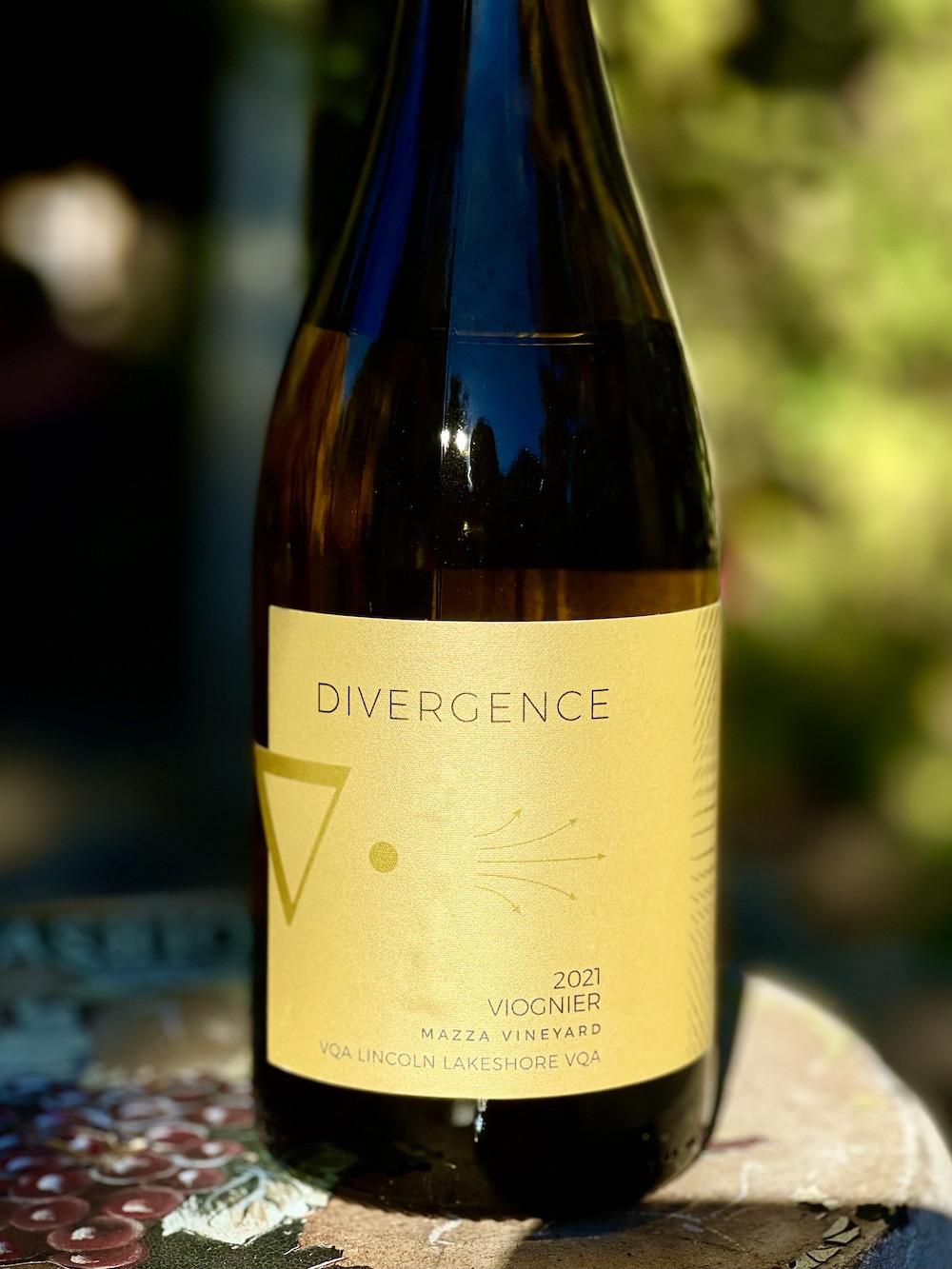
Divergence Wines Viognier 2021($35, 92 points) — There isn’t a lot of Viognier being made in Niagara, but Moote was offered a small batch from the Mazza Vineyard in Lincoln Lakeshore and decided to give it a shot, a nod to his love for the Northern Rhone, a region he favours for Viognier. There was a touch of botrytis in the vineyard, which Moote embraced, and he also barrel fermented the grapes and barreled down the finished wine in oak (25% new) casks for 9 months. This is a lovely Vio with an impressive nose of apricot, jasmine, grapefruit, peachy/melon, ginger, and spice. It has a rich, almost oily texture on the palate with creamy notes to go with apricot tart, ginger in spades, peach preserves, a touch of wild honey (despite only 4 g/l of RS) and plenty of lift and finesse on the long, luxurious finish. “I just wanted to showcase the fruit,” says Moote. “I made the wine I wanted to make.”

Wending Home Smith Vineyard Viognier 2021 ($28, 91 points) — The Rick Smith Vineyard in the Niagara Lakeshore sub-appellation is in its 23rd vintage. It was fermented and aged for nine months in a combination of used 228 and 500L French oak barriques and puncheons. It has a rich, luxurious nose of apricots, poached pear, florals, peach, honeysuckle, and spices. It’s unctuous on the palate with notes of apricot tart, peach, “like sucking on a peach pit,” says Ron Giesbrecht, a subtle note of honey, mango, and exotic baking spice notes with enough acidity to keep it fresh on the finish.

MW Cellars Viognier 2023 ($21, 91 points) — It should be noted that this lovely Viognier is in limited supply, and at this price, you should move quickly to get some. It’s delicious! The nose is an apricot/floral bomb with added white peach, melon, yellow apples and jasmine. It has a silky/oily texture on the palate with ripe tropical fruits, apricot tart, a touch of flint, beeswax, gingerbread and a vibrant, lifted finish. Very good value here.
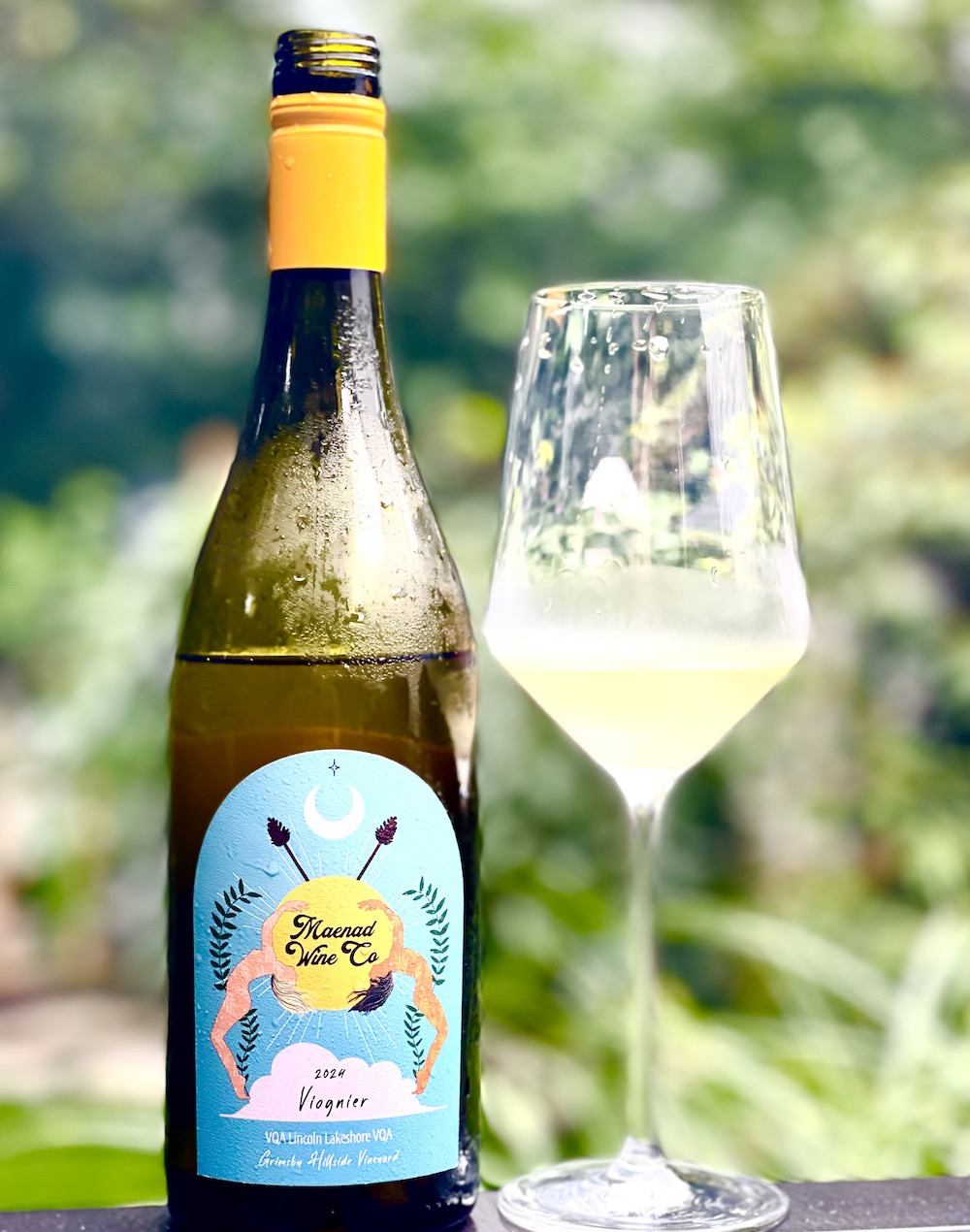
Meanad Viognier 2024 ($33, 92 points) — The Viognier grapes were hand-picked from the Grimsby Hillside vineyard when they “reached peak ripeness to get the ethereal texture and luxurious fruit character that is the promise of this grape,” said brand owner Yvonne Irvines. The grapes were whole bunch pressed, fermented with wild ambient yeasts and aged in an acacia wood puncheons for seven months. A small amount of sulphites were added before bottling and it was bottled unfiltered and unfined. As Yvonne Irvine says, “I’ve made a lot of Viognier in my time, the trick is picking for acidity and numbers, looking for that textural magic. I’m looking for soft and sexy.” It has a gorgeous nose of white flowers, apricot, white peach, honey suckle, jasmine and just a hint of spice. The mouthfeel is creamy and soft with ripe apricot, peach pie, honey, nectarine, mango and spice with a luxurious and lifted finish. No need to age this for long, it’s drinking very nice right now.
Other producers crafting Viognier wines:
• 13th Street Winery Viognier 2023 $22
• 180 Estate Winery Viognier 2023 $40
• Bella Terra Vineyards Viognier 2023 $24
• Niagara Teaching College Winery Dean’s List Viognier 2023 $29
• Meldville Dereck Barnett Viognier 2023 $22
• Pillitteri Andre de Grasse Seven Limited Edition Viognier $40
• Redstone Redfoot Vineyard Viognier 2023 $26
• Stratus Viognier 2023 $39
• Strewn Terroir Viognier 2023 $30
Comment here